In contemporary geopolitical and security studies, the analysis of non-state actors frequently remains anchored in the classical Westphalian paradigm, which privileges territorial sovereignty, institutional visibility, and the state’s legal monopoly over violence.
Yet the historical trajectory of political Islam demonstrates that when religious-political movements emerge under conditions of systemic repression and structural exclusion, they generate an alternative, highly resilient technology of power. Rather than confronting the symmetric apparatus of the state on conventional grounds, these actors construct an asymmetric power model—one that substitutes territorial contiguity with reterritorialized network architecture, bureaucratic hierarchy with esoteric secrecy, and material superiority with ideological hyper-motivation.
This article investigates the historical genesis and structural evolution of this asymmetric matrix through a comparative lens. Drawing upon Georg Simmel’s classical sociology of secret societies alongside contemporary Social Movement Theory, the study argues that the clandestine organizational patterns of modern Islamist movements are neither accidental nor purely reactive. Instead, they exhibit profound institutional isomorphisms with a pre-modern archetype: the medieval Nizari Ismaili order founded by Hassan-i Sabbah at the fortress of Alamut.
By tracing the operational continuum from the twelfth-century fidāʾī cells and fortified mountain archipelagos to the twentieth-century usrah structures of the Muslim Brotherhood and modern transnational networks, this analysis reveals how esoteric doctrine is transformed into an administrative and strategic resource. Ultimately, the paper examines the inherent paradox of this model: while clandestine network encapsulation ensures survival against authoritarian state power, the subsequent transition toward legal political participation and institutionalization inevitably triggers an acute crisis between ideological purity and political pragmatism.
Theoretical Framework: The Asymmetric Power Model and Clandestine Networks
Conceptualizing political dynamics within Islamic political discourse requires a redefinition of the classical political science categories established by the Westphalian paradigm of statehood. The traditional model of sovereignty operates through the principle of symmetric power—strictly defined territorial integrity, legal monopolization of the means of violence, a codified legal system, and visible, vertically structured institutions. However, when political Islam (Islamism) emerges and evolves under conditions of authoritarian state pressure and institutional exclusion, it inevitably generates an alternative political technology. This technology can be theorized as an asymmetric power model, in which the non-state actor's lack of material, military, and legal resources is compensated for by a specific network architecture, ideological hyper-motivation, and doctrinally legitimized conspiratorialism.
At the core of this asymmetric model lies a clash between two fundamentally different organizational principles: the Hierarchy (represented by the modern bureaucratic and repressive state) and the Network (represented by clandestine or semi-clandestine Islamist structures). While the hierarchy is cumbersome, dependent on geographic centers, and vulnerable at its apex nodes of governance, the clandestine network possesses the attributes of decentralization and fluidity. The network does not seek a frontal confrontation with the symmetric strength of the state apparatus; rather, it operates within its fissures, utilizing asymmetry as an instrument of strategic deterrence and gradual attrition of the sovereign. The absence of formal institutions becomes not a weakness, but a tactical advantage that renders the clandestine actor highly adaptable to a shifting security environment and resilient to external shocks.
To understand the profound sociological nature of this model, it is necessary to turn to the classical sociology of secret societies developed by Georg Simmel. Simmel postulates that secrecy functions as a powerful sociological factor that fundamentally transforms the internal geometry of a group. The introduction of secrecy erects an impenetrable wall between the organization and the outside world, thereby replacing the conventional social contract with an autonomous moral and normative system. In the context of political Islam, this means that the clandestine structure ceases to regard the laws of the secular state as legitimate. The internal imperative of the network supersedes the external legal order, turning loyalty to the organization and its leader into the sole moral compass for the individual. Secrecy produces a specific form of social encapsulation, within which the nucleus of a future, parallel sovereignty is conceived—one that challenges the state's right to be the sole source of norm-creation.
The internal architecture of these networks finds its theoretical explanation in contemporary Social Movement Theory, and more specifically within the resource mobilization framework. According to this perspective, clandestine actors succeed in surviving and transforming not merely due to ideological fanaticism, but thanks to their ability to redirect existing religious and social capital within society toward political ends. The clandestine Islamist organization structures its cells—known in the tradition of the Muslim Brotherhood as usrah (literally "family")—not as administrative units, but as micro-communities characterized by a high degree of internal solidarity and mutual trust. This cellular structure minimizes the risk of total network exposure in the event of a breach by state security services: if one cell is compromised, horizontal isolation prevents a domino effect across the rest of the organization.
Broadening this analytical horizon requires examining the concept of the "social surrogate," wherein the clandestine network begins to duplicate the functions of the state itself. When legitimate authority retreats from its social commitments due to economic incapacity or corruption, the network draws the masses into its orbit by maintaining informal economic systems and charitable networks. This phenomenon undermines state sovereignty not through acts of direct violence, but through the erosion of civic loyalty to official institutions. Under these conditions, the asymmetric model of power becomes the dominant reality for marginalized strata of the population. Power is no longer perceived as a downward vector emanating from ministries and presidential palaces, but as a horizontal web of dependencies and mutual aid, legitimized through the language of the sacred.
Deterritorialization and the Inclusion-Moderation Dilemma
A crucial element within the asymmetric power model is the manner in which the concept of space is redefined. The symmetric state is rooted in territory—it thinks through borders and geographic sovereignty. Conversely, the clandestine network operates in a mode of deterritorialization. It does not control physical space, but rather social and communication nodes. The power of the network is measured by the density of its connections, and by its capacity to infiltrate civil society, trade unions, mosque boards, and university campuses. In this way, while the state believes it holds a complete monopoly over public space, the clandestine actor constructs an invisible counter-sovereignty that undermines the legitimacy of official authority from within. This spatial fluidity enables the organization to project its resources beyond the borders of the nation-state, transforming into a transnational actor whose command centers remain elusive to classical intelligence and police apparatuses.
This transition from a clandestine network conspiracy to a legal political actor is accompanied by a profound internal dilemma, which political science defines as the inclusion-moderation thesis. Moving from pure asymmetry to participation in official institutions requires the network to begin operating—at least partially—according to the rules of symmetric hierarchy. Building political parties, participating in elections, and engaging in parliamentary activity necessitate pragmatization and an emergence from the shadows of esoteric secrecy. However, this process carries a serious risk of losing the very ideological purity and organizational flexibility that guaranteed the movement's survival during its clandestine phase.
Co-optation into the legal political architecture compels Islamist actors to undertake a complex conceptual revision: absolute Divine sovereignty (Hakimiyyah) must be tactically or strategically reconciled with the principles of popular sovereignty and constitutionalism. As a result of this tension, deep structural and doctrinal rifts open within the movements themselves between the so-called "ideological purists" (who view legalization as capitulation to the secular system) and "political pragmatists," who insist on institutional legitimation in order to gain tangible access to power resources. Consequently, the evolution from a conspiratorial network to a legal party often leads to moderation in rhetoric, while simultaneously triggering an organizational crisis by blurring the boundaries of the esoteric loyalty that sustained the movement underground. Analyzing this tension between network origins and institutional future is key to understanding the evolution of concepts of power in modern political Islam.
The theoretical framework of the asymmetric power model allows us to move away from a purely descriptive historical approach and view early Islamist movements as high-tech political actors. They successfully pit the flexibility of the network against the rigidity of state hierarchy, replacing geographic sovereignty with institutional infiltration and ideological hegemony. In academic discourse, this transformation is often interpreted as a shift toward "post-Islamism"—a phase in which Islamist actors, recognizing the monolithic strength of the modern nation-state, abandon revolutionary utopianism in favor of gradual socio-political reform from within.
Despite its modern manifestations, however, this asymmetric model does not emerge in a vacuum; it rests upon deep, archetypal structures within Islamic political history and the philosophy of power. Spatial fluidity, the encapsulation of the secret society, and the strategic deployment of ideological doctrine for the purposes of political survival possess clear historical isomorphisms. To grasp the genesis of this organizational matrix in its pure, classical form, it is necessary to turn our analytical focus centuries back and trace its most vivid historical precedent—the medieval Nizari order, where asymmetric thinking, messianic authoritarianism, and esoteric secrecy first crystallized into a complete doctrine of non-state sovereignty.
The Nizari Precedent: Esoteric Doctrine and the Fortress of Alamut
The historical generation of asymmetric models of power within the Islamic civilizational sphere finds its most striking classical precedent in the political and religious praxis of the Nizari Ismailis during the era of the Crusades. Founded by Hassan-i Sabbah and centred at the fortress of Alamut, the order did not merely represent a local heretical movement, but functioned as the first fully realized paradigm of non-state sovereignism in the history of the Middle East. The Nizari polity consciously and radically challenged the right of the Sunni Abbasid Caliphate in Baghdad and the military might of the Seljuk Empire to dominate the ulama, jurisprudence, and the overarching geopolitical existence of Islam. The lack of large-scale demographic, territorial, and conventional military resources forced the leadership at Alamut to develop a qualitatively new, innovative political technology for survival and expansion. This technology was predicated upon the complete, organic fusion of doctrinal esotericism with the strict, militarized, and heavily conspiratorial network structure of the order, which transformed faith into an administrative resource.
The ideological and metaphysical core of this asymmetric model rests upon the Shia concept of seeking hidden, inner knowledge (al-bāṭin), refracted through the radical Nizari doctrine of authoritative teaching (al-taʿlīm). The political dimension of this theology is directly tied to the absolute monopolization of truth by the Supreme Leader—either the Imam himself or his legitimate deputy and doctrinal spokesman (ḥujja). The true meaning of the Quran, the prophetic tradition (Sunnah), and divine law (Sharia) is declared completely inaccessible through the ordinary instruments of rational analysis (ʿaql) or the classical Sunni consensus of the community (ijmāʿ). Opposing intellectual pluralism, Nizari doctrine postulates that divine truth is revealed exclusively through the strictly hierarchical dissemination of instructions and directives from the very apex of the organization down to its outermost periphery.
This specific epistemological monopoly automatically imposes a requirement for absolute, blind, and uncritical obedience (taqlīd) from all lower tiers of the order toward commands emanating from the command center. Religious indoctrination and mystical training are thus transformed into an exceptionally efficient instrument for enforcing ironclad party discipline, turning every rank-and-file member into a blind tool of the leader’s political will.
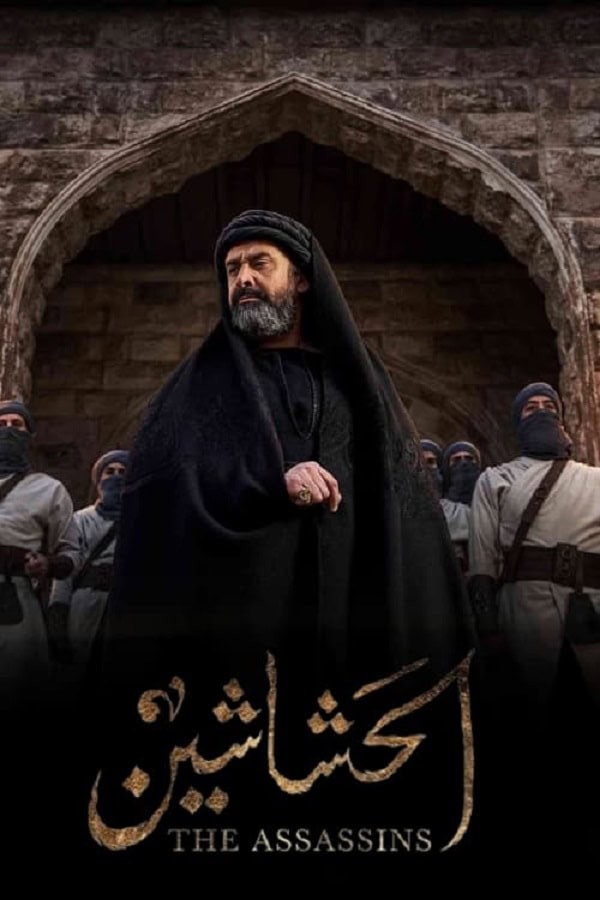
The internal architecture of the Nizari order is organized into a highly complex, pyramidal system of levels of initiation designed to completely insulate the operational secrets of the organization from the outside world. The perpetrators of political assassinations and acts of sabotage—known in Western historiography as Assassins, and in Islamic tradition as fidāʾī (literally "those who sacrifice themselves")—occupy the lowest, purely executive rung of this structure. These operatives are deliberately kept in a state of complete doctrinal innocence and intellectual isolation, systematically fed eschatological mythologems promising immediate, guaranteed entry into the gardens of Paradise upon demonstrating unreserved self-sacrifice in the name of the Imam. Conversely, the higher levels of initiation, composed of regional governors and Islamic missionaries (dāʿī), operate within a radically different, highly intellectualized, and pragmatic discourse. These elite figures possess an exceptionally sophisticated administrative and analytical apparatus, superior skills in theological and philosophical debate, and an innate capacity for waging comprehensive psychological warfare against external sovereigns. Esoteric filtration and the gradual disclosure of organizational goals ensure that the leadership's true political intentions remain entirely hidden from the broad masses. The masses themselves are viewed by Hassan-i Sabbah not as a subject of power, but merely as a passive social resource for legitimation, economic sustenance, and the continuous recruitment of fresh operatives for the needs of the clandestine network.
The philosophical and legal rift between the Nizari conception and the orthodox Sunni theory of the era—formulated by thinkers such as al-Mawardi—exposes fundamentally divergent approaches to sovereignty. While classical Sunni thought binds the legitimacy of the caliph to his capacity to defend the physical borders of the abode of Islam (Dār al-Islām) and enforce public law, Alamut constructs a sovereignty stripped of institutional encumbrance. Power among the Nizaris is entirely personified in the authority of the Imam and deterritorialized in its operational manifestation. The economic sustenance of this specific sovereignty also rejects classical imperial models of mass agricultural taxation (kharāj). Instead, the Nizari network transforms its mountain strongholds into autonomous production and storage hubs capable of enduring multi-year sieges thanks to irrigation and food preservation systems innovative for their time. The order’s financial flow is further fueled by the collection of internal religious levies and the tactical extortion of neighboring Sunni emirates and Crusader counties, which paid vast sums to guarantee the physical security of their rulers.
Spatial Strategy and the Psychology of Asymmetric Violence
The spatial realization of sovereignty within the Nizari state entirely upended traditional imperial conceptions of territorial power. The Nizaris consciously abandoned the costly and vulnerable control over flat, open, and easily accessible agricultural regions, the retention of which required maintaining vast standing armies for frontal defence. Instead, they directed their efforts toward constructing and capturing a densely consolidated network structure of impregnable, high-mountain fortresses in the Southern Caspian (the Daylam region and the Alborz mountain range) and in the inaccessible parts of the Syrian mountains (Jabal Ansariyah). This specific geographic model of power can be defined as an archipelago of sovereign, autonomous nodes existing within an open and permanently hostile sea of imperial territory. The fortress of Alamut served as the mental, spiritual, and logistical center of an authority that refused to depend on the contiguity of geographic borders and front lines. The physical and communicational isolation of these mountain strongholds became a pre-modern analogue to contemporary clandestine bases and "safe havens." From these fortified points, the non-state actor could effectively project influence, direct its cells, and sustain sovereignty while remaining virtually invulnerable to the conventional military strikes of major empires.
Political assassination became the primary, systematically applied strategic weapon of deterrence within the unconventional arsenal of the Nizaris. The elimination of key figures from the ruling Sunni elite—the most famous example being the execution of the great Seljuk vizier Nizam al-Mulk—in no way constituted an act of indiscriminate, chaotic terror. This type of violence operated as a precisely calculated, deeply deliberate communicative act whose primary objective was to completely paralyze the decision-making process within the adversary’s headquarters and instill structural fear among the rulers. The fidāʾī carried out their executions in highly public venues, deliberately selecting Friday mosques during mass prayers or official court receptions. The exclusive use of bladed weapons guaranteed immediate proximity, shock value, and maximum spectacle before the eyes of the public. At the foundation of this tactic lay a profound psychological mechanism of depersonalization of the perpetrator himself. Through prolonged deprivation of personal autonomy and ritual indoctrination, the fidāʾī ceased to think of himself as an individual subject, perceiving himself solely as a physical extension of the Imam’s dagger. Death in the execution of a mission was not viewed as a tragedy, but as the supreme phase of mystical union with the divine will. The psychological impact achieved in this manner far exceeded the scale of the actual physical damage inflicted upon the imperial administration. The vast Seljuk Empire was forced to enter into secret negotiations and make territorial compromises with a clandestine actor that, utilizing minimal material and human resources, succeeded in completely destabilizing the entire vertical structure of classical state sovereignty.
An analysis of the Nizari historical experience clearly demonstrates how a minority, persecuted religious movement can successfully undermine official sovereignty by constructing an alternative, countercultural, and entirely parallel power matrix. Here, esoteric doctrine serves as a powerful ideological glue capable of transforming geographic fragmentation into a highly cohesive, functioning network. Modern political Islam would later recognize in this pre-modern model the very same organizational and operational logic, transposing it into the realities of modernity. Subsequent transformations within contemporary Islamist movements would replace Ismaili theology with radical Sunni fundamentalist concepts, yet the organizational matrix remained identical. Examining these medieval roots of asymmetric power enables the researcher to trace the profound structural isomorphisms that directly link the mountain fortresses of the twelfth century with the clandestine party cells, conspiratorial networks, and closed structures of modern Islamist actors.
Modern Institutional Isomorphisms: From the Special Apparatus to Transnational Networks
Transposing the archetypal Nizari matrix into the political context of the twentieth and twenty-first centuries reveals deep structural and functional analogies that contemporary political science defines as institutional isomorphism. Modern political Islam emerged in an environment of intense colonial pressure, forced secularization, and subsequent destructive repression by postcolonial Arab authoritarian regimes. These specific historical circumstances compelled Islamist actors to swiftly abandon their initial legal forms of public action and regenerate the classical technologies of asymmetric power. The prototype of this shift from public preaching to conspiratorial clandestinity is found in the evolution of the Egyptian Muslim Brotherhood and the creation of its so-called "Special Apparatus" (al-tanzīm al-khāṣṣ) in the 1940s. The organization’s founder, Hassan al-Banna, initially relied on broad educational, proselytizing, and social activity (daʿwa). However, the gradual radicalization of the political space in Egypt necessitated the construction of a strictly closed, militarized wing whose structure remarkably replicated the hierarchical and psychological mechanisms of the medieval Nizari order. The Special Apparatus operated entirely outside the control of the movement's rank-and-file members, adhering to autonomous operational rules and an ironclad code of secrecy that encapsulated it into a distinct, sovereign power monad.
At the core of this modern isomorphism lies the redefinition of the traditional Islamic oath of allegiance (bayʿa), which undergoes a radical functional transformation during the clandestine transition. Classical Islamic legal discourse views the oath as a public, bilateral contract between the Muslim community (ummah) and its legitimate political sovereign (the caliph). In clandestine Islamist praxis, however, this instrument is appropriated and reformatted into an esoteric mechanism for the total subjugation of the individual to the party’s hierarchical ladder. A candidate for the Special Apparatus or the upper echelons of the party structure takes the oath in a darkened room, before the Quran and a weapon, swearing absolute, uncritical obedience to the Supreme Guide (al-murshid al-ʿām). This act entirely eliminates the activist's individual political will and autonomous moral choice. Obedience (ṭāʿa) ceases to be an instrument for maintaining general social peace and becomes a doctrinal requirement for party loyalty. Any attempt at intra-party criticism or intellectual dissent is treated not merely as political factionalism, but as religious apostasy and betrayal of the supreme divine plan.
The organizational cell of modern clandestine Islamist movements, termed usrah (literally "family"), fully replicates the mechanisms of gradual initiation characteristic of medieval dāʿīs. Each cell consists of a limited number of members placed under the direct guidance of a mentor (naqīb). The socialization process within the "family" spans years, with the objective of completely severing the individual's emotional and intellectual ties to external society. The world outside the cell is stigmatized as morally degraded, usurped by paganism, and inherently illegitimate. Cell members pool their finances, undergo shared, deep ideological indoctrination, and strictly police their personal conduct. The horizontal encapsulation constructed in this manner guarantees that in the event of an arrest and subsequent torture by state security services, the breach remains localized strictly within a single "family." The architecture of the movement resembles an endless labyrinth of mirrored rooms, in which the rank-and-file activist sees only their immediate comrades, without access to the strategic thinking of the senior party elite.
The doctrinal legitimation of this asymmetric model reaches its fully realized form in the works of the ideologue Sayyid Qutb, whose concept of contemporary ignorance (jāhiliyya) functions as a moral license for the destruction of secular sovereignty. Qutb postulates that virtually all modern political systems in the Muslim world have entirely forfeited their Islamic legitimacy by substituting divine law with human legislation. This usurpation of Divine Sovereignty (ḥākimiyya) entitles an avant-garde minority of true believers (jamāʿa) to coalesce into a clandestine structure and wage a struggle against the state. Here, esotericism manifests in the idea of the vanguard—the initiated group that alone comprehends the true meaning of the era and possesses the historic mission of reconstructing the caliphate. Qutbist discourse thus becomes a direct heir to the Nizari doctrine of authoritative teaching, insofar as it removes the source of legitimacy from societal consensus and concentrates it within a closed party ideology.
The deployment of asymmetric power networks during the second half of the twentieth century also gave rise to new phenomena associated with the total deterritorialization of political violence and the transformation of doctrine into a global operational mechanism. Actors such as early Al-Qaeda or the transnational structures of Hizb ut-Tahrir entirely reject the classical logic of the nation-state and conventional sovereignty. In this context, power is projected not through territorial expansion, but through the non-state actor's capacity to inflict shocking, asymmetric strikes against the central symbols of global symmetric strength. Public and mediated violence coordinated by these decentralized networks functionally replaces the psychological impact of the medieval public executions carried out by the Nizari fidāʾī. Minimal human and technological resources succeed in generating a global informational echo that entirely paralyzes the adversary's political will and erodes the sense of security at the very core of the Westphalian system.
The internal consolidation of these transnational networks frequently relies on establishing specific zones beyond state control—known in contemporary strategy as "safe havens"—which geopolitically duplicate the role of the Nizari Mountain archipelago of fortified bases. The Islamist actor exploits the weakness of failed states to transform geographically isolated and inaccessible regions into logistical hubs of counter-sovereignty. Within these gray zones, the clandestine structure imposes a parallel normative order, its own judicial system, and economic mechanisms fuelled by informal value transfer channels such as the hawala system. This contemporary economic model of asymmetric sustenance demonstrates the network's capacity to survive independently of international financial regulations, turning deterritorialization into a durable political resource.
Conclusion: The Limits of Asymmetry and the Post-Islamist Paradox
However, the transition of these clandestine networks into legal political actors in the late twentieth and early twenty-first centuries exposes the historical limits of the asymmetric model. The process of partiogenesis and forced institutionalization necessitates emerging from conspiratorial esotericism, which inevitably dilutes organizational cohesion. Islamist parties are compelled to participate in parliamentary elections, forge pragmatic coalitions with secular forces, and govern modern bureaucratic states. This direct collision with realpolitik gives birth to the phenomenon of post-Islamism, wherein pragmatism prevails over doctrinal utopianism. Organizational structures built on the blueprint of secret societies prove incapable of managing transparent public institutions without suffering severe internal fractures.
Integration into legal structures of governance inevitably catalyses profound doctrinal revisions that split the movements along the purist-pragmatist axis. The imposition of moderation under institutional pressure frequently leads to a loss of radical electoral and social capital, which automatically shifts toward new, more extreme clandestine formations. The evolution of actors such as the Welfare Party (Refah Partisi) in Turkey or the Ennahda Movement in Tunisia illustrates how the rules of the constitutional game compel the translation of sacred language into secular political programs. This process of conceptual secularization of the Islamist actor proves that the institutional pressure of the modern state possesses the capacity to deconstruct network architecture and subordinate it to Westphalian logic. The emergence of the dilemma between preserving ideological identity and acquiring electoral weight becomes a permanent crisis for modern political Islam. Organizational forms conceived in clandestinity lose their agility the moment they are transformed into ministerial offices and parliamentary factions. Despite these contemporary transformations, however, the early clandestine period leaves an indelible imprint on the DNA of Islamism. Structural isomorphisms categorically demonstrate that whenever legal channels of expression are forcibly closed by authoritarian power, the Islamist actor instinctively reverts to the archetypal model of network encapsulation, the secret cell, and the asymmetric contestation of official state sovereignty.
References:
Al-Anani, Khalil. Inside the Muslim Brotherhood: Religion, Identity, and Politics. Oxford: Oxford University Press, 2016.
Al-Mawardi, Abu al-Hasan. The Ordinances of Government (Al-Ahkam al-Sultaniyya). Translated by Wafaa H. Wahba. Reading: Center for Muslim-Christian Understanding, 1996.
Arquilla, John, and David Ronfeldt. Networks and Netwars: The Future of Terror, Crime, and Militancy. Santa Monica: RAND Corporation, 2001.
Ayubi, Nazih N. Political Islam: Religion and Politics in the Arab World. London and New York: Routledge, 1991.
Bayat, Asef. Life as Politics: How Ordinary People Change the Middle East. Stanford: Stanford University Press, 2013.
Bayat, Asef. Post-Islamism: The Many Faces of Political Islam. Oxford: Oxford University Press, 2007.
Burgat, François. Face to Face with Political Islam (L'Islamisme en face). London: I.B. Tauris, 2003.
Corbin, Henry. Cyclical Time and Ismaili Gnosis. London: Kegan Paul International, 1983.
Daftary, Farhad. The Assassin Legends: Myths of the Isma‘ilis. London: I.B. Tauris, 1994.
Daftary, Farhad. The Isma‘ilis: Their History and Doctrines. 2nd ed. Cambridge: Cambridge University Press, 2007.
Devji, Faisal. Landscapes of the Jihad: Militancy, Morality, Modernity. Ithaca: Cornell University Press, 2005.
Hegghammer, Thomas. Jihad in Saudi Arabia: Violence and Pan-Islamism since 1979. Cambridge: Cambridge University Press, 2010.
Hodgson, Marshall G. S. The Order of Assassins: The Struggle of the Early Nizari Isma‘ilis against the Islamic World. The Hague: Mouton, 1955.
Ivanow, Wladimir. Alamut and Lamasar: Two Mediaeval Ismaili Strongholds in Iran. Teheran: Ismaili Society, 1960.
Kepel, Gilles. The Prophet and Pharaoh: Muslim Extremism in Egypt. Translated by Jon Rothschild. London: Al Saqi Books, 1985.
Kohlberg, Etan. Belief and Law in Imāmī Shīʿism. London: Variorum, 1991.
Lewis, Bernard. The Assassins: A Radical Sect in Islam. London: Weidenfeld & Nicolson, 1967.
Lia, Brynjar. The Society of the Muslim Brothers in Egypt: The Rise of an Islamic Mass Movement 1928–1942. Reading: Ithaca Press, 1998.
Madelung, Wilferd. Religious Trends in Early Islamic Iran. Albany: Bibliotheca Persica, 1988.
Mandaville, Peter. Transnational Muslim Politics: Reimagining the Umma. London and New York: Routledge, 2001.
McAdam, Doug, John D. McCarthy, and Mayer N. Zald. Comparative Perspectives on Social Movements: Political Opportunities, Mobilizing Structures, and Cultural Framings. Cambridge: Cambridge University Press, 1996.
Meijer, Roel. Global Salafism: Islam's New Religious Movement. London: Hurst & Company, 2009.
Mirza, Nasseh Ahmad. Syrian Ismailism: The Medieval Period. London: Routledge, 1997.
Mitchell, Richard P. The Society of the Muslim Brothers. Oxford: Oxford University Press, 1993.
Nowell, Charles E. "The Old Man of the Mountain." Speculum, vol. 22, no. 4, 1947, pp. 497–519.
Roy, Olivier. The Failure of Political Islam (L'Echec de l'Islam politique). Translated by Carol Volk. Cambridge: Harvard University Press, 1994.
Sageman, Marc. Understanding Terror Networks. Philadelphia: University of Pennsylvania Press, 2004.
Schwedler, Jillian. Faith in Moderation: Islamist Parties in Jordan and Yemen. Cambridge: Cambridge University Press, 2006.
Simmel, Georg. "The Sociology of Secrecy and of Secret Societies." American Journal of Sociology, vol. 11, no. 4, 1906, pp. 441–498.
Stepan, Alfred. "An Islamocracy Yesterday, Today, and Tomorrow? Religion, Politics, and Democratic Theory." Journal of Democracy, vol. 23, no. 1, 2012, pp. 89–103.
Stern, Samuel Miklos. Studies in Early Ismā‘īlism. Jerusalem: Magnes Press, Hebrew University, 1983.
Volpi, Frédéric. Political Islam: A Critical Reader. London and New York: Routledge, 2011.
Wickham, Carrie Rosefsky. The Muslim Brotherhood: Evolution of an Islamist Movement. Princeton: Princeton University Press, 2013.
Wiktorowicz, Quintan. Islamic Activism: A Social Movement Theory Approach. Bloomington: Indiana University Press, 2004.
Willey, Peter. Eagle's Nest: Ismaili Castles in Iran and Syria. London: I.B. Tauris, 2005.
*Bulgarian Academy of Sciences